

Thai tradition : ค้นหาหนังสือธรรมะ หน้า 3 / 6
หน้าหนังสือทั้งหมด
161
Understanding Thai Customs: Wai and Wat
Suzanne Jeffrey
Wai -A Thai greeting, and sign or respect, done by placing the hands in front of the body, at about chest high, elegantly pressed together like a lotus flower. The higher the placemen
This text describes the 'Wai', a traditional Thai greeting that shows respect, performed by pressing hands together at chest height. The height of the hands indicates the level of respect. Additionall
201
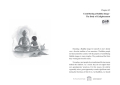
Contributing a Buddha Image: The Body of Enlightenment
Chapter 45
Contributing a Buddha Image-
The Body of Enlightenment
Donating a Buddha image for oneself or one's family
was a favorite tradition of our ancestors. Wealthier people
traveled around the co
In this chapter, we discuss the importance of donating a Buddha image as a traditional practice among our ancestors. Wealthier individuals often traveled to contribute these images to temples, recogni
3
Inaugural World Peace Ethics Contest: A Call for Harmony
As this is the inaugural World Peace Ethics Contest, I regard all of you who have agreed to participate as history-makers in the forging of World Peace in our world – you are pioneers in bringing fort
This inaugural World Peace Ethics Contest highlights participants as history-makers in promoting global peace. It emphasizes the importance of spiritual enlightenment, calling upon the merits of enlig
17
The Dhammakaya Tradition
The Dhammakaya Tradition
Founded by the Great Abbot of Wat Paknam Bhasicharoen, Phramongkolthepmuni (background picture), the Dhammakaya Knowledge was passed on to Khun Yai Chand Khonnokyoong (center
The Dhammakaya Tradition was founded by the Great Abbot of Wat Paknam Bhasicharoen, Phramongkolthepmuni. This rich tradition of knowledge was eventually passed on to Khun Yai Chand Khonnokyoong, who p
159
Glossary of Buddhist Terms
GLOSSARY 155
Dhamma (Skt. Dharma): the truth; the natural condition of things or beings; the law of their existence; the ethical code of righteousness; the whole body of religious doctrines as a sys
This glossary outlines significant Buddhist terms. Dhamma refers to truth and the natural law of existence as taught by the Buddha. Dhammacakkappavattana Sutta is recognized as the Buddha's first teac
23
WORLD DHAMMAKAYA CENTRE
WORLD DHAMMAKAYA CENTRE
O n its present 800 acres site, WDC will comprise the Great Sapha Dhammakaya Assembly Hall (the largest spiritual assembly hall in the world), the Phramonkollthepmuni Vihara,
The World Dhammakaya Centre spans 800 acres and includes the Great Sapha Dhammakaya Assembly Hall, the largest spiritual hall globally, and the Phramonkollthepmuni Vihara, dedicated to the revered med
61
The Pali Language and the Theravadin Tradition
NORMAN, K.R.
1983 “The Pali Language and the Theravadin Tradition.”
A History of Indian Literature: 1-2, edited by Jan Gonda. Wiesbaden: Otto Harrassowitz.
PEW Research Center.
2017 “World Bu
This text discusses the significance of the Pali language within the Theravadin Buddhist tradition. It examines its historical roots, literary contributions, and the ongoing impact on Buddhist practic
223
Exploring Dhammakāya and the Eightfold Path
Dhammakāya, Sotāpana: Effort, Right (see Right Effort)
Coarse, 108, 134; defilements of
Eightfold Path: arises internally as 136-7; Subtle, 108, 134
sphere 105; components 20, 117,
Dhammakāya Traditi
This text delves into the Dhammakāya tradition, highlighting key components of the Eightfold Path and its teachings on defilements, enlightenment, and the nature of suffering. Concepts are illustrated
561
Early Influences and Studies in Buddhism
Bumbacher, Stephan Peter. 2007. "Early Buddhism in China: Daoist Reactions." In A. Heirman and S. P. Bumbacher, eds., *The spread of Buddhism*, pp. 203-246. Leiden: Brill.
Chandawimala, Rangama. 2013.
This compilation examines significant scholarly works on early Buddhism, including Stephan Bumbacher's study of Daoist reactions to Buddhism in China, and Rangama Chandawimala's analysis of the Abhaya
5
Luang Por Dattajevo: A Visionary in Thai Buddhism
Luang Por Dattajevo (monastic name Phrabhavanaviriyakhun) is a Thai Buddhist monk who was born in 1941, in Kanchanaburi, Thailand. He was educated within the public school system of Thailand and went
Luang Por Dattajevo, born in 1941 in Kanchanaburi, is a notable Thai Buddhist monk and educator. After receiving a post-graduate degree in Australia, he helped establish Wat Phra Dhammakaya in 1970 an
183
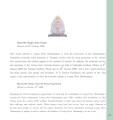
Honorific Plaques Awarded to Luang Phaw Dhammajayo
Honorific Plaque from Senate
Offered on 23rd February 2005
This award offered to Luang Phaw Dhammajayo is from the generosity of the Dhammakaya Foundation donating relief materials to Tsunami victims
Luang Phaw Dhammajayo received honors for his charitable acts, including relief efforts for Tsunami victims through the Dhammakaya Foundation, promoting unity among Thais and foreigners. He was awarde
49
Venerable Dhammajayo and his Contributions to World Peace
has also received an Honorary Doctorate Degree in Buddhist Studies from the Maha Chulalongkorn Raja Vidhayalai University.
He was the first Thai Buddhist monk to receive the Mahatma Gandhi Peace Awar
Venerable Dhammajayo has received multiple accolades for his dedication to promoting world peace through inner peace and meditation. As the first Thai Buddhist monk to receive the Mahatma Gandhi Peace

233
Thai Temples in Japan
Osaka
Wat Bhavana Osaka
DIMC of Osaka 4-6-27 Ohmiya, Asahi-ku, Osaka,
535-0002, Japan
Tel. +(81)-66-956-1400
Fax. +(81)-66-956-1401
Website : www.dimcip.org/osaka
E-mail : [email protected]
Nagan
This text provides information about two Thai temples located in Japan: Wat Bhavana in Osaka and Wat Thai in Nagano. Wat Bhavana Osaka is located at 4-6-27 Ohmiya, Asahi-ku, Osaka, and can be contacte
71
Refocusing Wat's Mission for Global Peace
Suzanne Jeffrey
predominantly by Thai people, and cater to the Thai population. Luang Por begins by saying that even though there are centers around the world, if the Wat really wants to gauge its’ s
In this meeting, Luang Por highlights the need for the Wat to refocus on its foundational mission of achieving World Peace through Inner Peace. He expresses concern over the limited participation of l
36
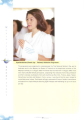
Upasikaratnam Ordination Programme
Upasikaratnam (Female Lay - Follower) Ordination Programme
The programme was organized to commemorate the Thai National Mother's Day and to
dedicate merit to Her Majesty the Queen of Thailand on the a
The Upasikaratnam Ordination Programme, organized on Thai National Mother's Day, celebrated Her Majesty the Queen's birthday on August 12, 1998. The event attracted nearly 200,000 female participants,

61
Dhammakaya Foundation's Educational Media
Cassettes
For the convenience in spreading Dhamma to youth around the country, Dhammakaya Foundation has produced video and audio cassette teaching materials on subjects including meditation instructi
The Dhammakaya Foundation produces a range of video and audio teaching materials, including meditation instructions, Dhamma music, and chantings to engage youth across Thailand. It operates 10 daily r
17
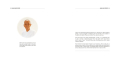
Khun Yay Chand Khonnokyoong: A Life Story
"Khun Yay" Chand Khonnokyoong was born on January 20, 1909, in Nakorn Chaisi, a rural municipality of Thailand. She was the fifth of nine children in the family. Her father, Ploy, and mother, Pan, wer
Khun Yay Chand Khonnokyoong was born on January 20, 1909, in Nakorn Chaisi, Thailand, as the fifth child in a family of rice farmers. The name 'Khun Yay' translates to 'grandmother' in Thai, symbolizi
166
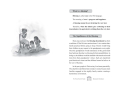
The Significance of Blessing in Thai Culture
What is a blessing?
Blessing is called vara in the Pali language.
The meaning of vara is progress and happiness.
A blessing means the act of giving the very best.
Therefore, when the elderly give a bl
คำว่าอวยพรในภาษาไทยหมายถึง 'วาระ' ซึ่งแปลว่าเป็นการให้สิ่งที่ดีที่สุดแก่กัน การอวยพรมีความสำคัญในวัฒนธรรมไทย โดยเฉพาะในการส่งผ่านคุณธรรมและความดีงามจากผู้สูงอายุไปยังเยาวชน ผ่านการเล่าเรื่องและพฤติกรร
37
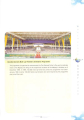
Upasakaratanam Ordination Programme
Upasakaratanam (Male Lay-Follower) Ordination Programme
The programme is organized to commemorate the Thai National Father's Day and to dedicate merit to His Majesty the King on the auspicious occasi
The Upasakaratanam Ordination Programme was established to celebrate the Thai National Father's Day and to dedicate merit to His Majesty the King on his birthday, 5 December 1998. In January 1999, the
29
The Importance of Group Meditation in Buddhism
Buddhist Congregation
Monica
: What does it mean to a Buddhist to practice meditation
in a ceremony like the Kathina Ceremony yesterday?
Does it enrich the Buddhist life to meditate together
with othe
In this text, Monica questions the significance of group meditation, particularly during the Kathina Ceremony. Luang Phaw explains that while individuals typically meditate alone during the week, comi